Minimally Invasive Bunion Correction

Walk pain-free again,
without the old-school
recovery.

Our minimally invasive bunion procedure corrects the deformity through incisions just a few millimeters wide, guided by live X-ray imaging and stabilized with small internal screws — so most patients are walking that day and back in regular shoes within weeks.

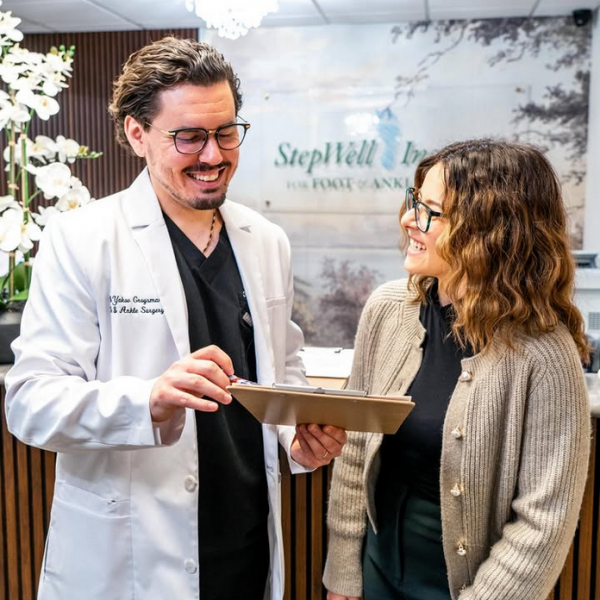
Dr. Yakov Groysman, DPM consulting a patient at StepWell Institute
3.2 days
Average return to work after minimally invasive correction.
Internal review · 412 patients · '22–'24
500+
Bunion procedures performed
94%
Patients pain-free at 6 weeks
5.0 ★
200 Google reviews
10 yrs
Serving Monmouth County
Foot diagram — bunion anatomy
What is a bunion?

Not just a bump — it's a slow-moving structural problem.

A bunion (hallux valgus) forms when the bone at the base of your big toe drifts out of alignment. The visible bump is just the surface symptom — the real issue is a joint that's progressively shifting and grinding with every step.

01

Genetic, mostly

About 70% of cases run in families. Tight shoes don't cause bunions — but they make a predisposed foot worse, faster.

02

It progresses

Bunions don't shrink on their own. Once they're symptomatic, every additional year typically widens the angle by 1–2°.

03

Earlier is easier

A 12° drift treated now means a smaller incision, faster recovery, and far better long-term outcome than waiting until 30°+.

When to come in

If three or more of these sound familiar, it's time.

Most patients put it off for years. The truth is that an early consult costs you 30 minutes and tells you exactly where you stand — even if the answer is "wait and watch."

Pain after standing

A dull throb that builds up after 2–3 hours on your feet — and lingers into the evening even after you've sat down.

Drift of the big toe

Your big toe is starting to angle toward the second toe. You can no longer wear shoes you wore comfortably 2 years ago.

Redness or swelling

The bump is warm to the touch by end of day, or visibly inflamed after exercise or a long walk.

Trouble fitting shoes

You've upsized — or you only wear wide-toe-box shoes now. Dress shoes are off the table.

Calluses or corns

The skin around the joint or under the second toe has thickened from the pressure shift.

Activity decline

You've quietly stopped — long walks, runs, hikes, dance class. The bunion is shaping how you spend your weekends.

MIS vs. traditional surgery

Two roads to the same correction. The recovery is what's different.

Open bunionectomy was the standard of care for decades and still has a place — for severe deformities. But for the majority of bunions, minimally invasive surgery (MIS) now produces an equivalent structural result with substantially less downtime.

Traditional bunionectomy

Open surgery · pre-2010 standard
  • 3–4 inch incision along the side of the foot
  • Hardware: 1–2 metal screws, sometimes plates
  • Plaster cast or boot for 6–8 weeks, non-weight-bearing
  • Typical return to dress shoes: 3–4 months
  • Visible scar, often pigmented
8–12
Weeks off feet
3–4 mo
To regular shoes

Minimally invasive bunion correction

MIS · what we do
  • Several millimeter-sized incisions instead of one long cut
  • Small internal screws hold the realignment; no cast required
  • Live fluoroscopic (X-ray) guidance throughout
  • Walking boot, weight-bearing same day
  • Return to sneakers in 3–4 weeks · scar nearly invisible by month 6
0
Days non-weight-bearing
3–4 wk
To regular shoes
Am I a candidate?

Not every bunion needs surgery.
Here's how to know where you stand.

We see patients at every stage — from a 10° drift with occasional discomfort to a 40° deformity that's been grinding for a decade. Where you fall on that spectrum determines whether surgery is the right call now, soon, or not yet.

15° or less · Mild

Probably not yet.

The honest answer.

A mild bunion that isn't limiting your activity or causing daily pain is worth monitoring, not operating on. We'll take a weight-bearing X-ray, measure the intermetatarsal angle, and give you a baseline. Come back in 12 months and we'll compare. If the angle is stable and you're not suffering, the right move is to watch it.

Typical advice: Return visit in 12 months. No procedure today.
15° – 30° · Moderate

The sweet spot for MIS correction.

Where MIS does its best work.

A 20° drift treated now means a smaller correction, less disruption to surrounding structures, and a faster recovery than the same foot at 30°. Most patients in this range are full candidates. Disqualifiers: active infection, uncontrolled diabetes, severe peripheral vascular disease, or bone quality that won't support fixation — we identify all of these at consult.

Typical advice: Strong candidate. Procedure can usually be scheduled within 2–3 weeks of consult.
30°+ · Severe

Surgery is almost certainly indicated.

The question is which procedure.

At this stage, the joint has typically been remodeling for years. Minimally invasive correction can still work for many severe bunions, but cases with significant joint arthritis or a very wide intermetatarsal angle are better served by an open technique with broader internal fixation. We'll tell you honestly which one applies to your foot.

Typical advice: MIS candidate in most cases. A small percentage are referred to open correction. You'll know which before you leave.
Disqualifiers

What disqualifies someone entirely.

A small number of patients aren't candidates for elective bunion correction regardless of severity. If any of these apply, bring it up at the consult — some are absolute, some are manageable with the right preparation.

  • Active foot infection or open wound — surgery can't proceed until resolved
  • Uncontrolled diabetes (HbA1c > 9) — impairs healing and raises infection risk substantially
  • Severe peripheral arterial disease — inadequate blood flow means wounds don't close reliably
  • Active smoking — nicotine constricts vessels and dramatically increases complication rates; we ask patients to stop 4 weeks before and 4 weeks after
  • Osteoporosis (severe) — bone density too low to hold fixation reliably
  • Pregnancy — elective procedures are deferred until postpartum
What happens
if I just wait?

Bunions don't stabilize on their own once they're symptomatic. The average progression is 1–2° per year in a foot that's already drifting. That doesn't sound like much until you realize that a 22° bunion at age 45 becomes a 32° bunion at 50 — the difference between a straightforward MIS procedure and a more involved reconstruction.

Waiting also tends to involve quiet compromises: the hike you skip, the shoe section you avoid, the evening events you cut short because your foot is throbbing. Those losses are real and cumulative, even if they don't show up on an X-ray.

That said — if your bunion is stable, small, and not limiting your life, waiting is a completely reasonable choice. We'll tell you which category you're in.

Not sure where your bunion falls? Bring your most recent X-ray to the consult — or we'll take a fresh weight-bearing image in the office. You'll leave with a clear answer.

Book a free consult ›
The procedure

Same-day, in our office, under local anesthesia.

From check-in to walking out the door, plan on about 90 minutes. You don't need a driver — local anesthetic only, no sedation, no overnight stay.

15 min

Pre-op imaging & mapping

Weight-bearing X-ray · digital plan

We capture a fresh weight-bearing X-ray and trace the exact correction angle on your image. You'll see the planned outcome — bone-by-bone — before we start.

5 min

Local anesthesia

Ankle block · no sedation

A targeted nerve block numbs the foot from the ankle down. You stay fully awake and chatty — most patients listen to a podcast through the procedure.

35 min

Bone realignment

Millimeter incisions · fluoroscopic guidance

Through a handful of small openings, the surgeon uses specialized instruments under live X-ray to reshape and reposition the metatarsal, then secures the correction with small internal screws. Minimal soft-tissue disruption, no large hardware.

15 min

Walking boot & discharge

Weight-bearing immediately

One small bandage, a post-op walking boot, and you walk out under your own power. Your follow-up is set for day 7 to confirm alignment is holding.

Recovery

A realistic timeline — not a "you'll be back in heels in a week" promise.

Healing is biological and varies by patient, but this is the median path our 412 most-recent patients followed. We'll give you a personalized version of this on day 1.

Day 1

Walking boot, home

Foot elevated for the rest of the day. Most patients are off pain medication by bedtime.

Day 7

First follow-up

Bandage off. New X-ray confirms alignment. Light desk work resumes for most.

Week 3

Sneakers again

Boot is gone for the majority. Walking is normal. Some swelling at end of day is expected.

Week 6

Back to exercise

Light running, hiking, gym work. We stage your return so the joint isn't stressed too soon.

Month 6

Final result

Scar fades to a thin line. The deformity is fully corrected. You forget about your foot.

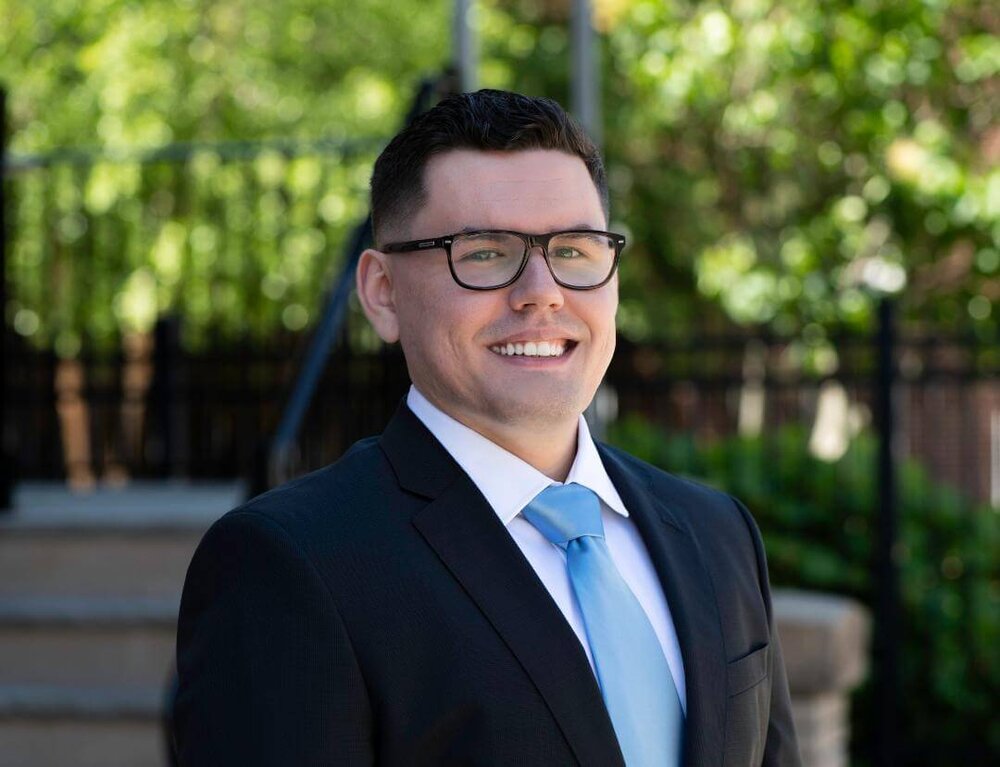
Dr. Yakov Groysman, DPM
Meet your surgeon

Dr. Yakov Groysman, DPM

Board-certified podiatric surgeon with over 15 years of experience in advanced foot and ankle care. Dr. Groysman is fellowship-trained in minimally invasive forefoot reconstruction and has personally performed over 2,000 bunion corrections. He believes in treating every patient as a person — not a problem — addressing root causes before reaching for surgery.

Board Certification
ABFAS, Foot Surgery
Fellowship
Hospital for Special Surgery
Hospital Affiliation
Monmouth Medical Center
Languages
English, Spanish
"Your foot is supposed to fade into the background. Our job is to make it boring again."
See it for yourself

A look inside the practice — straight from Dr. Groysman.

Quick clips from our patients, procedures, and day-to-day at the institute. Tap any short to play it through.

New shorts every week · @StepWellInstituteforFootAnkleH Watch all on YouTube ›
Patient stories

200 Google reviews. Here are three of them.

★★★★★
I'd been quietly avoiding hikes for five years. Three weeks after my procedure I did a 6-mile loop in Hartshorne with zero pain. I cried at the trailhead.
M
Marisol R.

★★★★★
I scheduled mine on a Friday and was answering emails from my desk on Tuesday. The recovery was nothing like what my mom went through with her bunions in the 90s.
D
Devon C.
★★★★★
Dr. Groysman walked me through the X-ray on his tablet and showed me exactly what he was going to do. I've never had a surgeon explain a procedure that clearly. Six months later, you can't even see the scar.
E
Eleanor T.
Insurance

Most plans cover medically necessary bunion correction.

We're in-network with the major regional carriers and we'll run a free benefits check before you ever schedule the procedure.


FAQ

The questions we get every week.

If yours isn't here, the consult is the right place — bring your X-rays from another office and we'll go over them together at no charge.

How does minimally invasive bunion surgery actually work?
We make incisions just a few millimeters wide and use specialized rotary instruments under live X-ray (fluoroscopic) guidance to cut and realign the metatarsal bone. The correction is stabilized with small internal screws. Because the soft tissues are barely disturbed, swelling, pain, and scarring are all dramatically lower than with traditional open surgery.
Will my insurance cover this?
If your bunion is medically necessary (causing pain, limiting activity, or progressively worsening), the answer is almost always yes. We run a free benefits check before scheduling so you'll know your exact out-of-pocket up front — no surprise bills.
Is it painful?
During the procedure: no — you're under local anesthesia. Days 1–3: mild ache that responds to over-the-counter ibuprofen for most patients. We rarely prescribe opioids for this procedure anymore.
What if I have bunions on both feet?
We can do them simultaneously, but most patients prefer to do one at a time, two to four weeks apart. That way you always have a "good" foot to balance on. We'll talk through what fits your life.
Can the bunion come back?
Recurrence is uncommon (under 4% in our published data) when the procedure is done at the right stage. The biggest risk factor is going back to footwear that crowds the toes — we'll send you home with specific guidance.
How is this different from a "shave-down" procedure I've heard about?
A shave-down (exostectomy) removes just the bony bump — the visible prominence on the side of the foot — without correcting the underlying metatarsal angle. It's simpler and faster, but it treats the symptom, not the cause. Recurrence rates after a shave-down are significantly higher than after a corrective osteotomy. What we do is different: we realign the metatarsal bone at the source, correct the hallux angle, and let the joint heal in its proper position. The bump disappears because the bone is back where it belongs — not because we filed it down.
How long will I be off work?
It depends on what your work involves. Desk / remote: most patients return Tuesday or Wednesday after a Friday procedure. Light standing / retail / teaching: typically 1–2 weeks in the surgical shoe, then cleared for extended standing as comfort allows. Manual labor / prolonged standing: 4–6 weeks before returning to full duty. We'll give you a return-to-work note and can talk to occupational health directly if needed. Driving: cleared when you can operate the pedals without hesitation — typically 1–2 weeks for a left-foot procedure, 3–4 weeks for the right.
I'm diabetic. Can I still have this procedure?
Many diabetic patients are excellent candidates — but diabetes requires extra evaluation before we proceed. HbA1c at or below 8 is our general threshold for elective procedures; higher than that, we'll ask you to work with your endocrinologist before scheduling. Peripheral neuropathy changes the post-op monitoring protocol — we use additional imaging checkpoints to compensate for reduced pain feedback. Peripheral vascular disease — we may order a vascular study to confirm adequate blood flow before proceeding. If you have well-controlled diabetes without significant complications, your risk profile may not be meaningfully different from a non-diabetic patient.
What if I've already had bunion surgery and it came back?
Revision surgery is more complex than primary correction, but it's something we do. The approach depends on what was done originally: what type of osteotomy, what hardware is in place, how much bone stock remains, and where the deformity has re-established itself. Bring whatever surgical records and post-op imaging you have. If you don't have them, we can often piece together the picture from a fresh weight-bearing X-ray. Revision cases get a longer initial consult — typically 45–60 minutes — because the planning is more involved.
Do I need a referral from my primary care doctor?
No. The consult with Dr. Groysman is a standalone visit — no referral required, no pre-authorization needed just to have the conversation. If we decide to schedule a procedure, we may request recent bloodwork and medical clearance from your PCP, particularly for patients over 60 or with cardiovascular history. We'll tell you exactly what we need and coordinate it for you.
What shoes should I have ready before surgery?
Three things: (1) the surgical shoe — we provide this at no charge on procedure day, worn for the first 3–4 weeks; (2) a roomy sneaker for week 3–4 with a wide toe box and removable insole — New Balance 990, Hoka Bondi, Brooks Ghost, ASICS Gel-Nimbus are all popular with our patients; avoid anything that laces tightly across the forefoot; (3) a wide-fit slipper or Birkenstock-style sandal for getting around indoors before the swelling settles. We'll send you the full pre-op checklist when you schedule. It's short.
Free 30-minute consult

Bring your X-ray.
Leave with a plan.

You'll meet Dr. Groysman, see your foot on his screen, and walk out with a clear answer about whether you need surgery, when, and what it'll cost. No pressure, no follow-up sales calls — that's not how we work.

Same-week consults

Most new patients get on the calendar within 3 business days.

Free insurance verification

We run your benefits before you arrive so the conversation is real.

Replies in < 4 minutes

A real person at our front desk, business hours, no chatbot.

Replies in < 4 minutes

Request a Callback

HIPAA-aware · Encrypted in transit SSL
Serving Monmouth & Middlesex County

Patients travel from across
central New Jersey.

Because true minimally invasive bunion care isn't available at every podiatry practice. If you're within 45 minutes, we're worth the drive — the procedure takes one morning, the recovery is one month, the result is the rest of your life.

◆ Manalapan Marlboro · 12 min Freehold · 20 min Holmdel · 25 min East Brunswick · 30 min Red Bank · 25 min Princeton · 40 min
Our home base
Manalapan, NJ
450 Route 9 North — easy access from Route 9 and Route 33, ample parking. Most Manalapan patients are in and out of their procedure in under two hours and home before lunch. We know the community — the Manalapan-Englishtown school district families, the Route 9 corridor commuters, the Town Center regulars. When you walk in, you're not a chart number.
bunion surgeon Manalapan NJ · MIS bunion surgery · podiatrist Manalapan
12 min · Route 9 South
Marlboro, NJ
Marlboro residents make up a significant portion of our patient base — the drive down Route 9 is direct and under 15 minutes in normal traffic. For a procedure that gets you back to your desk in 3 days, that proximity matters.
bunion surgery Marlboro NJ · podiatrist Marlboro · MIS bunion Marlboro Township
20 min · Route 9 / 33
Freehold, NJ
Freehold Borough and Township patients have easy access via Route 9 South or Route 33 West. Several of our reviewed patients — including Marisol R., who hiked the Hartshorne trails three weeks post-procedure — are from the Freehold area. We operate out of Monmouth Medical Center; we're not affiliated with CentraState.
bunion surgeon Freehold NJ · minimally invasive foot surgery · podiatrist Freehold
25 min · Parkway / Rt 34
Holmdel, NJ
Holmdel Township has a high concentration of active professionals and former athletes — exactly the patient who can't afford 8 weeks in a boot. Devon C. from Holmdel was back at her desk the Tuesday after a Friday procedure. That's the typical path for our Holmdel patients.
bunion surgery Holmdel NJ · foot surgeon Holmdel · MIS bunion Holmdel
30–35 min · Route 9 North
East Brunswick & Old Bridge
Middlesex County patients from East Brunswick, Old Bridge, and South Brunswick find us just up Route 9. If you're north of Old Bridge, StepWell is typically the closest practice offering true minimally invasive bunion correction — most Middlesex County practices refer complex bunion cases south anyway.
bunion surgeon East Brunswick · bunion surgery Old Bridge · podiatrist Middlesex County
25–30 min · Parkway / Rt 35
Red Bank & Tinton Falls
Eastern Monmouth County patients from Red Bank, Tinton Falls, Fair Haven, and Little Silver are 25–30 minutes from our Manalapan office. The Garden State Parkway to Exit 123 is the cleanest route.
bunion surgery Red Bank NJ · MIS bunion Monmouth County · podiatrist Tinton Falls
35–40 min · Route 1 / I-95
Princeton & Hamilton
We see a meaningful number of patients from Mercer County — Princeton, Hamilton Township, and Lawrence. For a procedure that requires only a handful of follow-up visits and is otherwise fully managed in-office, the drive from Mercer County is a one-time commitment.
bunion surgeon Princeton NJ · MIS bunion Hamilton · podiatry Mercer County
Don't see your town?
Book a free consult ›
If you're within 45 minutes of Manalapan, we're worth the drive.

The procedure takes one morning. The recovery is one month. The result is the rest of your life.